
In brief
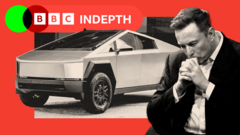
As public sentiment shifts against CEO Elon Musk, Tesla is confronted with broader issues affecting its market presence and brand reputation.
Ben Kilbey, a father and fervent advocate for electric vehicles in the UK, recently announced he would sell his treasured Tesla Model Y due to his disapproval of CEO Elon Musk's controversial actions, particularly regarding his recent political maneuvers. Kilbey's stance reflects a growing backlash against Musk, who is under fire for leading the newly-established Department for Government Efficiency (DOGE), which aims to drastically reduce U.S. government spending.This shift in public perception is evidenced by numerous peaceful protests spanning continents, including the U.S., Canada, Germany, and Portugal, where demonstrators have organized outside Tesla dealerships amid rising tensions associated with Musk's actions. Although many protests remained civil, there were notable incidents of vandalism, including the defacing of vehicles and stores associated with the electric vehicle manufacturer.Musk’s involvement in international politics only adds fuel to the fire, as he recently showed support for the far-right German party Alternative für Deutschland and criticized various British politicians, actions that have drawn severe backlash from detractors. His comments regarding the escalating violence against Tesla dealerships, labeled as "insane and deeply wrong," indicate an attempt to distance the company from the turmoil while highlighting the disconnect between his public antics and the brand's mission of advancing sustainable technology.In the context of rising competition within the EV sector, Tesla's sales figures are now raising eyebrows. While its Model Y topped the sales charts globally last year, overall, Tesla reported a slight drop in sales for the first time in over a decade—from 1.81 million to 1.79 million vehicles. Analysts are beginning to question whether Musk's divisive political actions are alienating Tesla's core customer base, especially among high-income consumers traditionally inclined to purchase electric vehicles.Adding to the challenges is a perceived stagnation in Tesla's product lineup. With models like the Model S and Model X remaining unchanged since their launches in 2012 and 2015 respectively, and competition surging from traditional manufacturers and innovative new brands, Tesla's once cutting-edge offerings now appear dated. Industry experts warn that without fresh innovations, Tesla risks falling behind in a rapidly evolving market.The prospects of Tesla's future remain uncertain, particularly as Musk pivots focus toward ambitious plans for autonomous vehicles. Yet skeptics remain apprehensive, citing a lack of tangible progress in his promises of introducing a robotaxi service—a goal the CEO has repeatedly set over the years without delivery.For Tesla, the pressing question will be whether Musk, despite his significant influence and shareholder stake in the company, can effectively lead amidst the controversy and competitive landscape. Meanwhile, calls for leadership changes grow louder, as investors and analysts alike suggest that a new CEO could benefit the company by shifting focus back to its core automotive missions, distancing itself from the political turbulence surrounding Musk.Tesla, once viewed as a pioneering force in electric vehicles, now stands at a crossroads, facing significant internal challenges just as government, economic, and consumer landscapes shift around it. How Musk navigates this turbulent terrain could determine the future of one of the world's most recognizable automotive brands.

