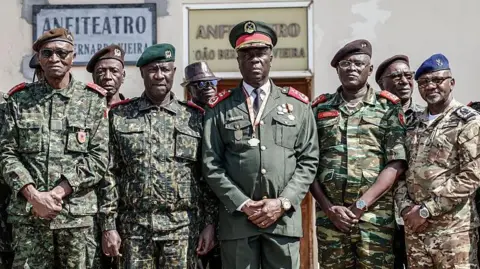
An army general has been sworn in as Guinea-Bissau's new head of state a day after an apparent coup.
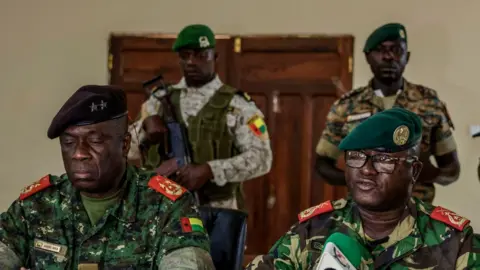
Gen Horta N'Tam becomes the transitional president for a period of one year. He took the oath on Thursday, in brief and muted proceedings at army headquarters.
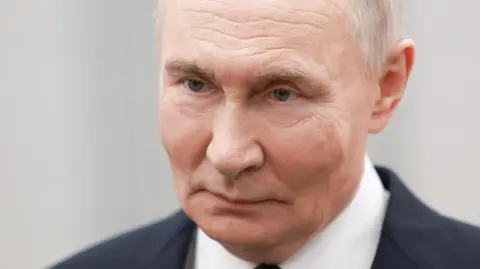
N'Tam, who until a day earlier had been head of the presidential guard, barely cracked a smile during his swearing-in or while stood outside flanked by officers while for cameras.
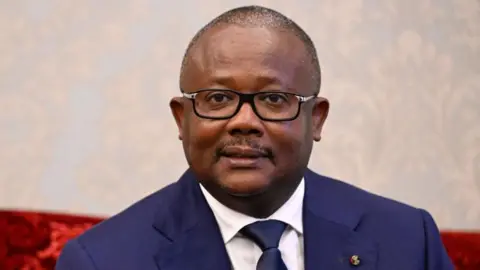
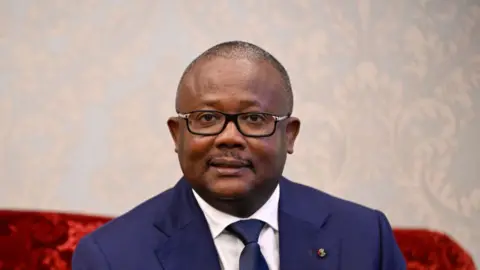
Some civil society groups in Guinea-Bissau have accused outgoing President Umaro Sissoco Embaló of masterminding a simulated coup against himself with the help of the military, saying it was a ruse to block election results from coming out in case he lost.
This manoeuvre aims to prevent the publication of the electoral results scheduled for tomorrow, November 27, the civil society coalition Popular Front said in a statement.
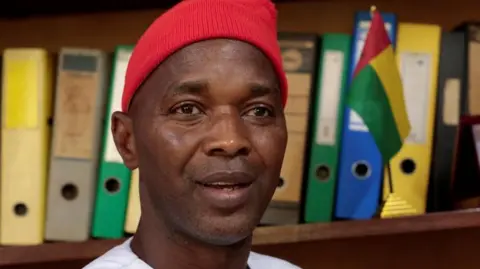
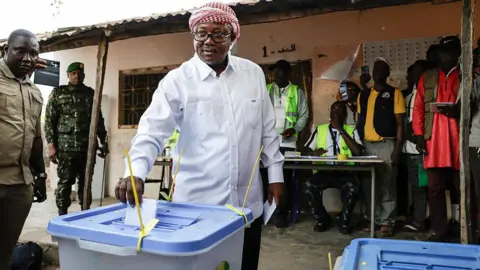
His closest election rival Fernando Dias has echoed these claims, while Embaló has not responded to the allegations. He has claimed to have survived several coup attempts during his time in office, although his critics have accused him of fabricating crises to suppress dissent.
The military has already suspended the electoral process and blocked the release of the results of Sunday's presidential election, which were expected on Thursday.
An anonymous military source informed AFP that Embaló is being held by the army at its staff headquarters, where he is reportedly being well-treated.
In response to the coup, African Union Chair Mahmoud Ali Youssouf has demanded the immediate and unconditional release of President Embalo and all detained officials, reminding leaders to respect the electoral process.
Sandwiched between Senegal and Guinea, Guinea-Bissau is notorious for drug trafficking and has seen multiple coups since gaining independence in 1974.
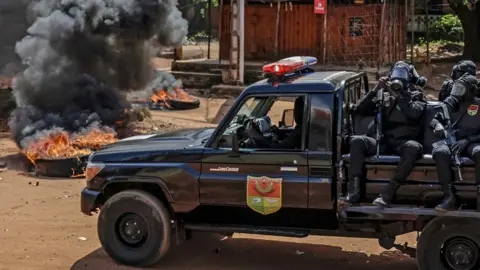
On Wednesday, a group of military officers proclaimed control over the nation, suspending the electoral process and closing borders amid allegations of plots by politicians allegedly supported by a drug baron.
Both Embaló and his main challenger claimed victory before the sudden upheaval, which severely complicates the political landscape in one of the world’s poorest countries.