In brief
In the Adra cemetery, Khaled al Hamad's search for his two missing brothers leads him to disturbing discoveries of human remains, echoing the plight of countless families whose loved ones vanished under the Assad regime. As the regime's power wanes, the search for answers has intensified, revealing a history of brutality and sorrow, with families desperately seeking closure amidst the trauma of their past.
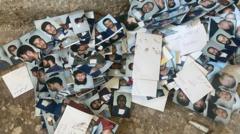
In the Adra cemetery, where hope intertwines with sorrow, Khaled al Hamad digs into earth stained with the memories of the lost. Two lonely graves dot an otherwise bare landscape, remnants of the once tightly controlled territory of President Bashar al-Assad's regime. But following the regime's retreat, Khaled's quest for answers leads him to shake loose the concrete covering a grave containing at least six body bags, each bearing names and prison identification numbers.Khaled's heart races as he examines the contents of the bags—a disquieting collection of skulls and bones, remnants believed to belong to victims of the regime's vicious crackdown on dissent. Among them, he hopes to find his brothers, Jihad and Hussein, abducted over a decade ago. "Some people were taken to an area called 'the driving school' and liquidated there," he says, haunted by the possibilities. "Maybe they are in some of these bags buried here."International organizations, including Human Rights Watch, are investigating such grim discoveries, including reports of similar bodies found dumped elsewhere. The aftermath of Assad's regime has ignited a spark of hope among families yearning for news of their loved ones, many of whom were lost to a labyrinth of prisons infamous for their inhumanities.Once, the area around Adra was a perilous no-stop zone; halting could mean a one-way trip to an unknown fate. Now, as the shackles of fear begin to loosen, families are rushing to find answers for those lost to the notorious prison system, including infamous sites like the Mazzeh military airbase.At Mazzeh, the chilling remnants of torture linger in the air. Abu Jarrah, a member of the group that recently seized control, reveals chilling accounts of interrogations where electric shocks were administered to extract desperate confessions from prisoners. "The prisoner loses his mind and confesses everything," he explains, revealing the systematic horrors that once transpired behind its guarded walls.Among the rubble of memory, families sift through a chaotic sea of photographs, searching each face for a sign of their missing son or daughter. With sobs echoing through the crumbling corridors, a mother weeps for her son Mahmoud, whose last known location was the airbase prison. "We've spent 11 years searching from one prison to another," she laments, trauma etched deep in her sorrowful gaze.As efforts to document the atrocities persist, many families are overwhelmed by the sheer volume of records. "How can I find him among this many prison files?" pleads a distraught mother amid mountains of uncataloged evidence, pointing to the painful reality of lost narratives. Each document holds a piece of the suffering, a trace of families torn apart under the regime’s relentless grip.On the outskirts, as the remnants of military structures echo their quiet demise, rogue forces and outside powers vie for control amid the chaos. The winds of change have opened discussions about Syria's future, but for many, unanswered questions about the past loom large. The lingering unanswered fates of the missing form an integral narrative within the harrowing story of Syria's long conflict.As Khaled continues his search, the haunting silence of the graves speaks volumes—calling for recognition, for justice, and for closure. Amidst the ruins of a regime that once reigned supreme, the people of Syria are determined to reclaim their story.