
In brief
As discussions flicker between the US and China, the stakes grow higher for both nations to avoid economic fallout.
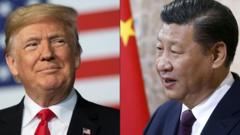
In the early hours of Thursday morning, Chinese state media reported that the United States has been eager to restart tariff negotiations with China, a development highly anticipated amid the surge of tariffs reaching as high as 245% on certain Chinese goods bound for the US. This escalation threatens to choke trade between the two most powerful economies, stoking fears of a possible recession. Social media platform Weibo featured a post from an account linked with China Central Television, revealing insights from unnamed sources indicating that Trump's administration has been exploring different channels to engage with Beijing regarding tariffs.The post came shortly after President Trump claimed that discussions were already underway—a statement Beijing swiftly rebuffed. In fact, Yuyuantantian, the pro-government social media account, articulated that "China has no need to talk to the United States," insinuating that the US is currently the more anxious party seeking dialogue.This ongoing exchange of claims and rebuttals serves as a tactical "game of chicken" between Trump and Chinese leader Xi Jinping, with both leaders attempting to preserve their images while discreetly seeking a common solution to reduce tensions. Ja Ian Chong, an assistant professor of political science at the National University of Singapore, believes both parties are reluctant to give in first, thereby prolonging their standoff. He argues that, while neither wants to appear weak, both nations recognize that easing tensions would ultimately benefit their economies.Wen-Ti Sung from the Australian Centre on China in the World illustrated the situation by comparing the two leaders to race cars on a collision course; the one that veers first would ostensibly appear to be at a disadvantage. This creates a unique paradox where both nations are incentivized to reach a resolution yet are locked in a battle of perceptions. Claiming victory in domestic narratives stands as a crucial motivator for both leaders. As the trade stalemate continues, US retailers, including major chains like Walmart, are already warning of impending price hikes and potential supply shortages. Trump's administration faces economic challenges compounded by rising recession fears after a recent contraction of the US economy—the first since 2022. Meanwhile, Xi is grappling with low consumer spending, a struggling property market, and high unemployment.Despite these challenges, both countries understand they can no longer strive for absolute victories. Mr. Sung points out that Trump is aware that meeting all his demands is unlikely, which pushes him to identify a compromise that can be framed as a victory to please domestic audiences. Likewise, China finds itself needing to navigate its public narrative carefully, portraying a strong front while still being open to negotiation.As negotiations have yet to formally commence, the mutual recognition of some form of communication development between both sides offers a glimmer of hope. Political analysts believe that until both parties feel convinced that they are no longer at risk of looking weak, discussions may remain stagnant. Only time will reveal who will ultimately concede first in this high-stakes economic clash.

